
 English
 한국어
한국어 Français
 Español

Pneus pour plate-forme de travail pneumatique : comment choisir les bonnes options solides et remplies de mousse
Une nacelle élévatrice posée sur un chantier de construction avec un pneu crevé est l'une des causes les plus courantes de temps d'arrêt imprévus sur les nacelles élévatrices. La réponse pratique consiste à choisir une construction de pneu qui ne dépend pas de la pression de l'air : des modèles solides ou remplis de mousse. Ils éliminent les crevaisons, réduisent les risques d'échauffement et maintiennent la machine stable sur un sol irrégulier. Au-delà de l'avantage évident d'avoir moins de crevaisons, les bons pneus pneumatiques pour plate-forme de travail contribuent également au confort de l'opérateur, à des intervalles d'entretien plus longs et à un coût total de possession inférieur.
Content
- 1 Pourquoi la sélection des pneus affecte les performances de la plate-forme de travail aérien
- 2 Types de pneus de plate-forme de travail pneumatique
- 3 Comment sélectionner les pneus de plate-forme de travail pneumatique
- 4 Meilleures pratiques d’inspection et de remplacement
- 5 Le coût réel des pneus pour plates-formes de travail pneumatiques
Pourquoi la sélection des pneus affecte les performances de la plate-forme de travail aérien
Le pneu est le seul point de contact entre la machine et le sol. Sa performance affecte directement six résultats mesurables.
- Stabilité : La plateforme doit rester stable même lorsque la flèche est complètement déployée avec un travailleur en hauteur. La déflexion des pneus, la compression de la bande de roulement et la rigidité des flancs contribuent tous à la quantité de mouvement de la machine avant que le système de nivellement ne compense.
- Résistance aux dommages : Les chantiers contiennent des clous, des barres d’armature, des copeaux de métal et de l’asphalte brut. Un pneu qui résiste aux crevaisons réduit le risque de temps d'arrêt imprévus et permet à l'équipage de respecter son planning.
- Durée de vie : Le remplacement des pneus sur une grande plate-forme est coûteux et prend du temps. Le bon composé et la bonne construction peuvent prolonger considérablement l’intervalle entre les remplacements.
- Traction : Les rampes abruptes, le béton humide et le gravier exigent une adhérence fiable. La sculpture doit correspondre au terrain de chaque site.
- Confort de l'opérateur : La qualité de roulement se transmet à travers les pneus. Un pneu bien conçu absorbe les impacts des racines, des bordures et des irrégularités du sol.
- Retour sur investissement : Le coût du pneu, la main d’œuvre nécessaire pour le changer et les heures de travail perdues constituent dès le départ de solides arguments en faveur de pneus de qualité.
Types de pneus de plate-forme de travail pneumatique
Les pneus des plates-formes de travail pneumatiques ne sont pas universelles. Le type de machine, le terrain et le cycle de service déterminent la meilleure construction.
Pneus de nacelle
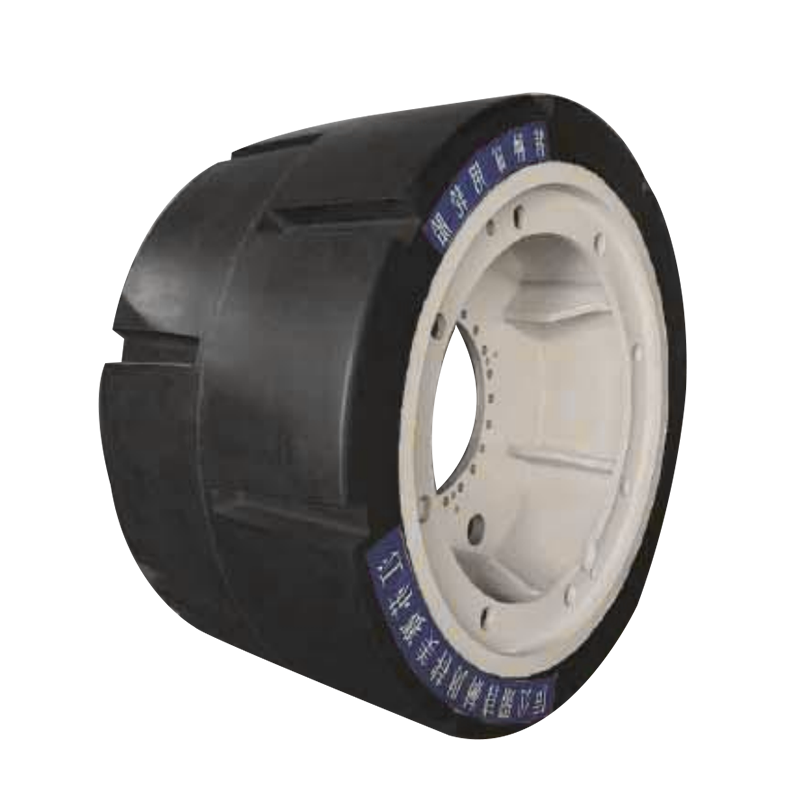
Les nacelles élévatrices - articulées et télescopiques - fonctionnent sur les chantiers de construction, la maintenance industrielle et les projets d'installations. Leurs pneus doivent supporter la charge d'une grosse machine en hauteur tout en maintenant la plate-forme stable sur un terrain accidenté. Les pneus pleins pour nacelles élévatrices sont un choix courant car ils éliminent le risque de perte d’air et gèrent bien les surfaces rugueuses. Des composés non marquants sont disponibles pour une utilisation en intérieur sur les sols délicats.
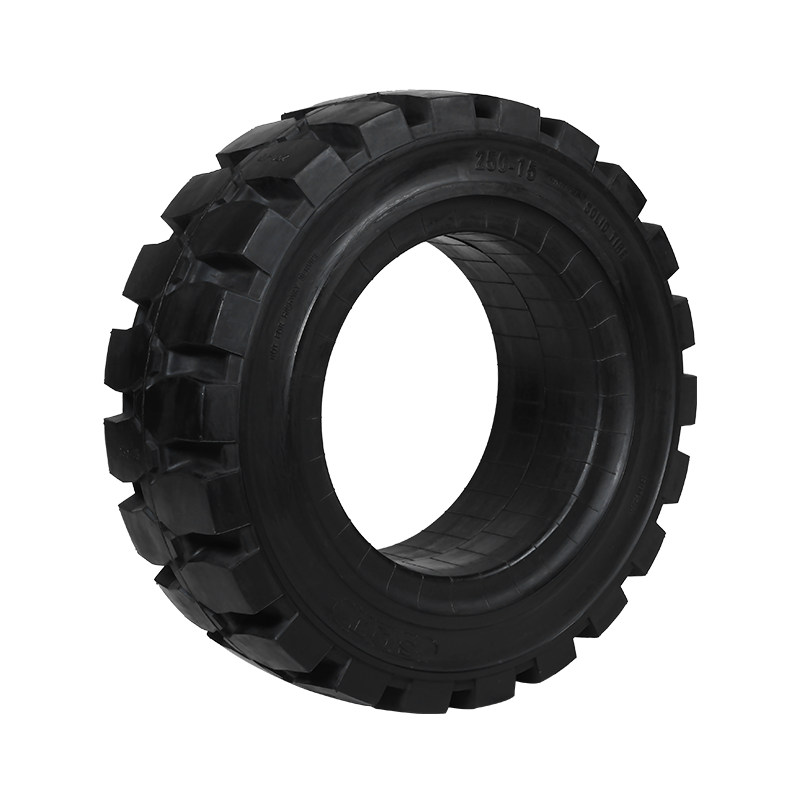 Pneus de levage à flèche solide pour plates-formes de travail aérien Ces pneus pleins sont conçus pour les nacelles élévatrices, offrant un support stable sur terrain accidenté. Leur composé de caoutchouc résistant à l'usure garantit une longue durée de vie et une sécurité, ce qui en fait un choix fiable pour les chantiers de construction et de maintenance industrielle. Voir le produit →
 Pneus pour élévateurs à ciseaux
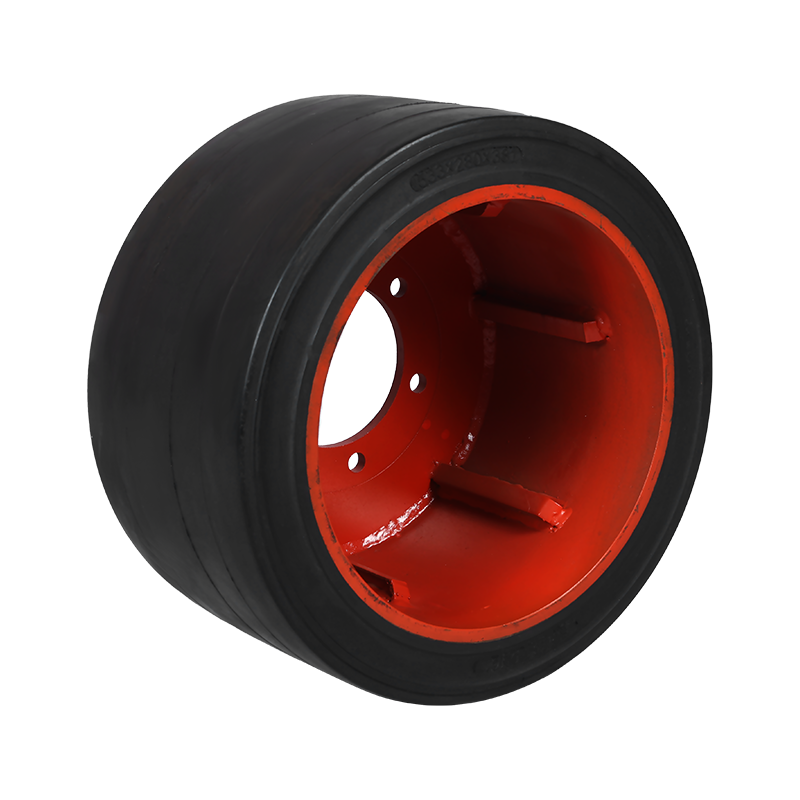
Les plateformes élévatrices à ciseaux fonctionnent principalement dans la construction et l’entretien des installations. Ils travaillent à des hauteurs inférieures et se déplacent généralement sur des sols en béton intérieurs ou sur des terrains extérieurs. Les pneus des nacelles élévatrices à ciseaux ont souvent un diamètre plus petit et plus larges que les pneus des nacelles élévatrices, ce qui leur confère plus de contact avec le sol et de stabilité. Le bon choix dépend du fait que l'ascenseur reste sur des dalles intérieures plates ou qu'il se déplace également sur des chantiers inégaux.
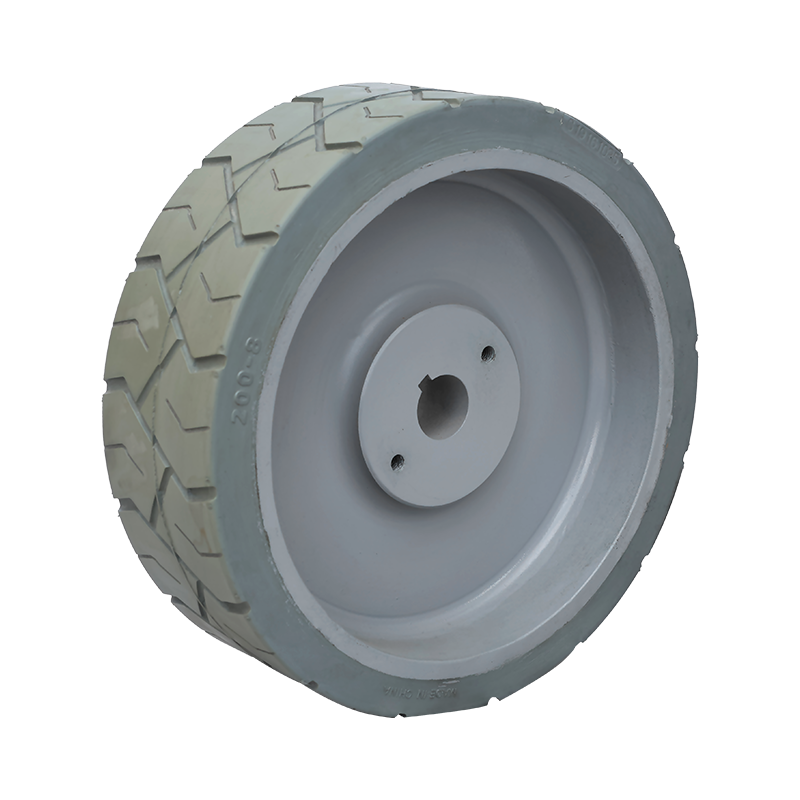 Pneus élévateurs à ciseaux non marquants pour une utilisation intérieure et extérieure Ces pneus pour élévateurs à ciseaux sont dotés d'un composé écologique non marquant et d'une bande de roulement profonde pour une meilleure résistance à l'usure. Leur conception autonettoyante convient aux environnements intérieurs exigeants tout en offrant des performances stables sur diverses surfaces. Voir le produit →
 Pneus remplis de mousse
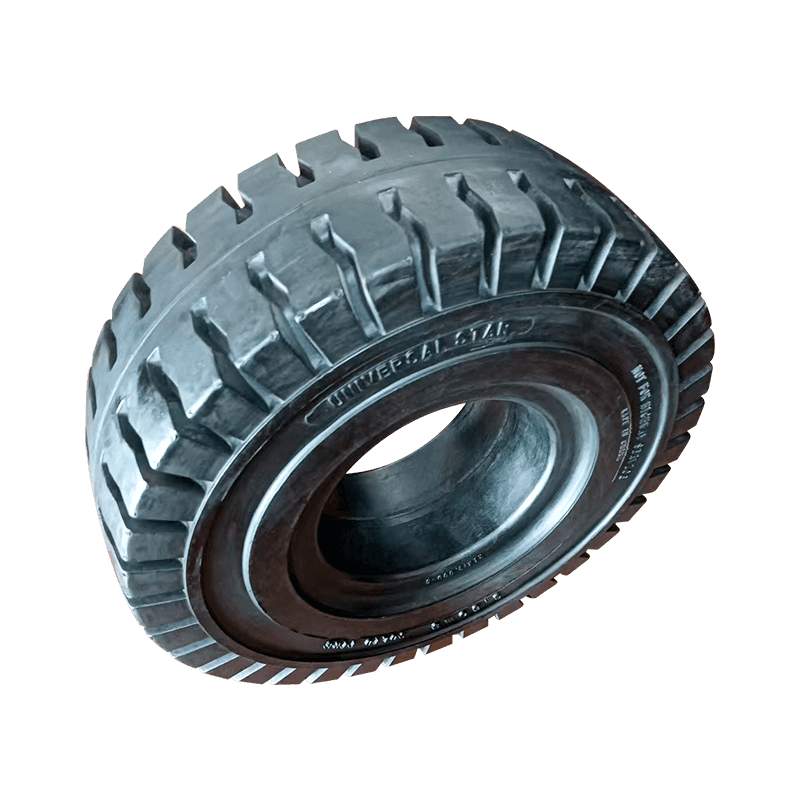
Les pneus remplis de mousse remplacent l'air d'une enveloppe de pneu standard par un remplissage en polyuréthane. Cela offre les avantages d'amortissement d'un profil pneumatique tout en réduisant considérablement le risque de temps d'arrêt lié à une crevaison. Ils constituent un excellent choix pour les plates-formes de travail aériennes dans des environnements remplis de clous, de ferraille et de débris. Ils éliminent également les contrôles de pression d’air, ce qui simplifie l’entretien quotidien. Le compromis est un poids supplémentaire et une résistance au roulement légèrement plus élevée, ce qui est gérable à basse vitesse de fonctionnement.
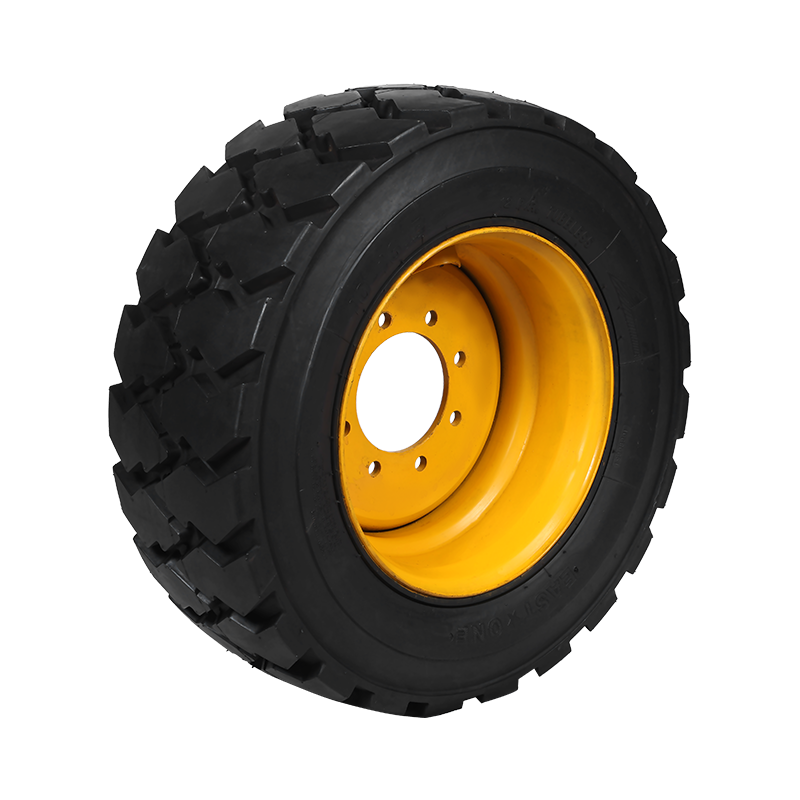 Pneus remplis de mousse résistant aux crevaisons pour plates-formes de travail aérien Les pneus remplis de mousse combinent la capacité de charge solide des pneus avec l'élasticité des pneus pneumatiques. Ils résistent aux perforations causées par les débris, réduisent les temps d'arrêt et offrent un fonctionnement stable et confortable sur des conditions routières complexes, idéal pour les chantiers remplis de débris. Voir le produit →
 Comment sélectionner les pneus de plate-forme de travail pneumatique
Lorsque l'on compare les pneus de différents fournisseurs, le tableau ci-dessous couvre les facteurs les plus importants.
| Facteur | Que vérifier | Pourquoi c'est important |
|---|---|---|
| Capacité de charge | Charge nominale au poids maximum de la plate-forme | Le pneu doit supporter le poids de la machine plus la charge maximale de la plate-forme |
| Diamètre et largeur | Dimensions du passage de roue et espacement des essieux | Un dimensionnement incorrect peut provoquer des frottements, des problèmes de direction ou une mauvaise répartition de la charge. |
| Modèle de bande de roulement | Modèles nervurés, à crampons ou lisses | Les bandes de roulement nervurées améliorent la stabilité de la surface, les motifs de crampons améliorent la traction hors route |
| Dureté composée | Évaluation au duromètre | Les composés plus durs résistent aux coupures mais offrent moins d'absorption des chocs |
| Formule non marquante | Si des traces noires sont laissées sur les sols | Critique pour les applications dans les entrepôts, les hôpitaux et les salles blanches |
Au-delà de la table, considérez l’environnement opérationnel. La roche concassée et les arêtes vives nécessitent un composé de caoutchouc plus dur. Les surfaces mouillées ou glissantes nécessitent une bande de roulement plus profonde avec plus de zones vides. Les exigences de propreté rendent quasiment obligatoires les composés non marquants.
Meilleures pratiques d’inspection et de remplacement
L’inspection régulière des pneus est tout aussi importante que le choix du bon pneu. Les principaux contrôles pour les pneus des plates-formes de travail pneumatiques sont :
- Dommages superficiels : Recherchez les coupures, les rainures et les objets incrustés dans la bande de roulement et les flancs. De petites coupures peuvent se transformer en échecs majeurs.
- Usure inégale : Un port sur un côté indique un problème de répartition de la charge ou d'alignement.
- Accumulation de chaleur : Après une utilisation prolongée, le pneu ne doit pas être excessivement chaud. La chaleur dégrade le caoutchouc et réduit sa durée de vie.
- Usure du diamètre : Les pneus pleins deviennent plus petits à mesure qu’ils s’usent. Remplacez-les une fois que la profondeur de la bande de roulement affecte la stabilité de la machine.
Mélanger les types de pneus sur le même essieu est une erreur courante. Les pneus remplis de mousse et pneumatiques fléchissent différemment. Les mélanger peut faire pencher la machine d’un côté, créant une instabilité en hauteur. Remplacez toujours les pneus du même essieu par paires ou par quatre, et ne mélangez jamais des pneus remplis de mousse avec des pneus gonflés à l'air sur le même pont élévateur.
Comprendre l'ingénierie derrière pneus pleins pour plate-forme élévatrice aide à cette décision. Le composé, la conception de la bande de roulement et les détails de construction influencent tous le comportement d'un pneu sur le chantier.
Le coût réel des pneus pour plates-formes de travail pneumatiques
Les prix varient considérablement selon la taille, le composé et la construction. Les pneus pleins coûtent généralement plus cher que les pneus pneumatiques, mais ils durent plus longtemps et nécessitent moins d’entretien global. Les pneus remplis de mousse se situent entre les options pneumatiques et solides, le remplissage augmentant le coût initial mais réduisant le risque de temps d'arrêt.
Trois facteurs façonnent le coût réel de possession :
- Temps d'arrêt : Une crevaison sur une nacelle élévatrice peut arrêter un équipage entier. La perte de productivité dépasse souvent le coût du pneu lui-même.
- Travail de montage : Les pneus pleins et remplis de mousse sont plus lourds et plus difficiles à monter que les pneus pneumatiques. Un service d’atelier de pneus peut être requis, surtout sur place dans les endroits éloignés.
- Intervalle d'entretien : Un pneu de haute qualité peut durer deux à trois fois plus longtemps qu'une alternative économique, réduisant ainsi le coût par heure de fonctionnement.
CONTACTEZ-NOUS
-

Email: SMT001@saimeite-tyre.com
-

Téléphone: +86-18451337018Route n° 1 de Renmin Sud, District de Yandu, District de Yancheng, Province du Jiangsu, Chine